
From Interest to Investment: Citrine Breaks Down the Art of Evaluating Deals
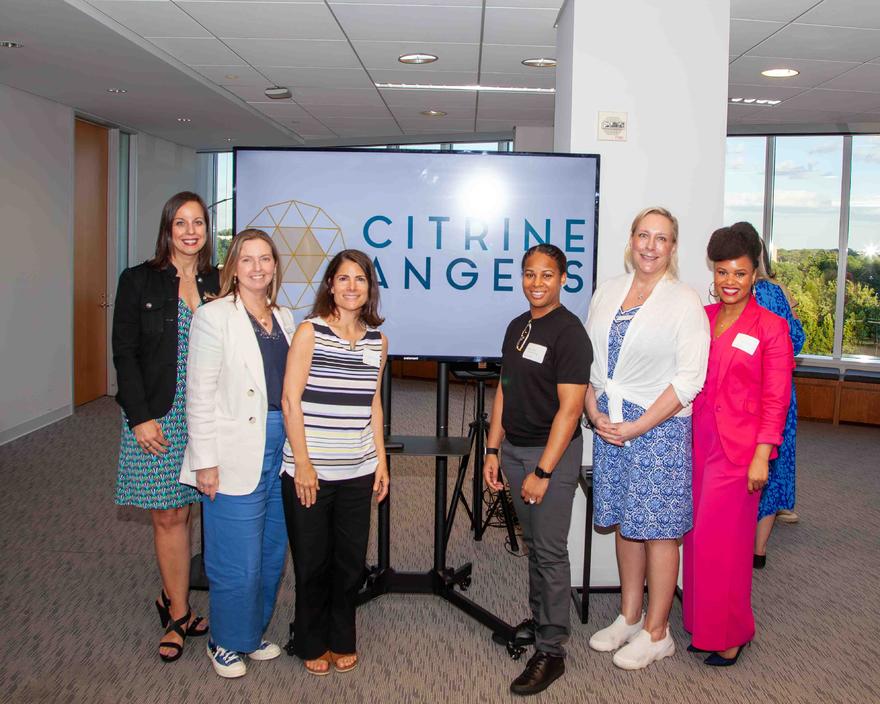
On May 28, Citrine Angels brought together a room full of investors, founders, and angel-curious women for the second session in the Female Funder Panel Series: From Interest to Investment — Evaluating Founders and Deals. Building on February’s session on demystifying angel investing, this evening - which was powered by our non-profit education-focused subsidiary Citrine Impact - moved from inspiration to instruction, offering a practical, candid look at what it actually takes to evaluate a pitch.
The Panel
The conversation was moderated by Katherine Hill Ritchie, Citrine board member and Founder and CEO of Private Capital Investments — an investor with more than 20 years of experience spanning family offices, startups, and institutional funds. Three seasoned investors rounded out the panel:
- Barb White, Citrine board member, Founder of Avoka Group, and adjunct professor at Johns Hopkins Business School, where she teaches angel and venture investing
- Andrea DiMarco, Venture Partner at Blu Venture Investors and former tech investment banker at Lehman Brothers and Deutsche Bank
- Shalanda Armstrong, Managing Partner at 100KM Ventures and angel investor for over 15 years with more than 30 direct investments
Citrine co-founder and board president Stephanie Marshall opened the evening with a milestone worth celebrating: Citrine has now invested more than $2 million in women-led startups — representing hundreds of individual checks written by women in this community. Executive Director Dawn Myers, who recently joined as Citrine’s first-ever ED, offered a warm welcome and a reminder that the mission of scaling access and impact is just getting started.
Team or Market — Where Does Due Diligence Begin?
The panelists brought different frameworks — all of which offered something useful. Andrea starts with the team, specifically the CEO: Do they understand the problem they’re solving? Do they have the right people around them? Barb leans toward market first: she mentally recalculates every projection she sees, cutting numbers in half and asking whether the business is still viable under those assumptions. Shalanda put it plainly: “A great founder with an okay idea will build a great company. A good founder with a great idea will kill a company.”
What they agreed on: founders who deflect follow-up questions — who haven’t done the work to prove product-market fit or can’t explain their go-to-market — are telling you something. The best founders understand both the opportunity and the obstacles.
The X Factor: Can They Run Through a Wall?
Beyond financials and market size, Shalanda articulated something harder to measure but essential: founder resilience. “Can you run through a wall? That’s the X factor for me.” She shared the story of an early investment in Instacart — not an obvious bet at the time, given that Whole Foods had just been acquired by Amazon and seven other delivery platforms were already in market. The founder’s conviction made the difference.
Andrea echoed the point: if you can see the founder’s passion and will to succeed, sometimes it’s worth waiting for traction rather than walking away. Barb added that she was still examining her own framework — asking whether being too rigid might mean missing founders who don’t fit a standard mold but have exactly what it takes.
Valuations, Cap Tables, and the Fuzzy Math of Early-Stage Deals
The panel demystified several concepts that often stop new investors in their tracks: SAFEs, convertible notes, cap tables, and valuations. Shalanda called valuations “fuzzy math” — because none of it matters until there’s an exit. She cautioned against companies with inflated valuations, noting that founders who can’t grow into their raise face down rounds that hurt everyone. For software companies, a reasonable range sits around 10–15x revenue.
Barb added that Citrine is often not the lead investor, meaning members are evaluating whether to accept existing terms — not negotiate them. That shifts the due diligence question: do I believe in this company enough to enter at these terms?
The panel also addressed timelines honestly: early-stage investing is patient capital. Depending on the sector, expect 5, 7, or 10+ years. But secondaries are increasingly a legitimate exit ramp, and the panelists shared real examples from their own portfolios of exits that came earlier than expected.
A Room That Reflects the Change We’re Building
One of the most energizing parts of the evening was the conversation that happened between the formal discussion. First-time attendees sat beside Citrine members who have already written multiple checks. Angel-curious women asked candid questions about accreditation, portfolio construction, and how to know when they’re ready. The panelists answered as peers, not gatekeepers — generously, candidly, and without jargon.
That is the culture Citrine is building: one where knowledge is shared openly and women feel equipped, not excluded, by the complexity of this asset class. As Katherine reminded the room early in the evening: due diligence isn’t rocket science. It’s a process. And like anything else, it gets easier the more you do it.
Join the Movement
The Female Funder Series continues this fall. Whether you are ready to invest, still building your confidence, or just beginning to explore what angel investing could mean for your financial future — there is a place for you here. Three ways to take the next step:
- Donate to Citrine Impact. Your contribution fuels free educational programming that equips more women with the knowledge and confidence to become investors.
- Attend the next Female Funder session. The third and final installment of the series is coming this fall. Sign up for updates to be the first to know.
- Join Citrine Angels. Step into the role of investor and help direct capital toward high-potential, women-led companies. We also invite potential members to attend a pitch meeting as our guest.
Capital is knowledge. And when women understand how deals work, they show up — at the table, with their checkbooks, and with their voices. We hope to see you at the next one.